University of North Carolina Ashville Athletics

50 Years of Title IX: Lise Gregory - A tale of two continents
05.31.2022 | Women's Tennis
ASHEVILLE, N.C. – On June 13, 1972, Title IX, also referred to as the Equal Opportunity in Education Act was signed into law, stating: “No person in the United States shall, on the basis of sex, be excluded from participation in, be denied the benefits of, or be subjected to discrimination under any education program or activity receiving Federal financial assistance.”
As we celebrate the 50th year of Title IX, Bulldog Athletics will look to honor and acknowledge the lasting impact it has had on education and athletics. For this month, we caught up with our very own Lise Gregory as she takes us through her upbringing in South Africa to UNC Asheville and Title IX’s impact along the way.
On Growing up in South Africa:
“Being the youngest of four and having three older brothers, it was pretty much survival of the fittest!! I followed the boys around and did whatever they did (skateboarding, riding bikes and home-made go-carts, swimming, climbing trees, etc), sometimes with painful consequences. I played tennis a lot growing up but it was by no means all I did.”
Fortunately for Gregory, there was a tennis club next door, affording her the opportunity to play the game she would grow to love.
“Tennis was what I did for fun as a child. It was very unstructured. I did not have a coach beyond the occasional clinic. When you got good enough you could play doubles with the adults, which was a wonderful learning experience.”
Aside from living next to a tennis club, Gregory considered herself lucky to play the sport
“There were opportunities – belonging to a tennis club was cheap and so you could be from virtually any socio-economic group and still be able to play. There was very little financial support from the South African Tennis Union so if you wanted to play international tournaments it was dependent on your family being able to afford it. Of course, South Africa was at the height of the apartheid era when I was young, so if you were not white, you had no opportunities to play sport or get a decent education. You had very little opportunity to do anything outside of working a menial job. It was a horrific system.”
Tennis was what I did for fun as a child. It was very unstructured. I did not have a coach beyond the occasional clinic.
As Gregory continued to compete, she would begin to recognition as a top-tier player, representing her state at 13 years old in under-18 tournaments.
On Her Plan After High School:
“After high school, I tried to play professionally. My parents could not afford to help me, so I had to work for six months in order to go play for three months. That was not conducive to a successful career so after doing that for a little over a year I gave up on my dream. Soon after that, I got a call from the coach at Miami offering me a scholarship. I told him no. Three months later, I called him back and told him I wanted to “try it”. Fortunately he still had a scholarship available (Miami was not fully funded at that time) and the rest is history. My game improved dramatically at UM. Having an excellent coach and training at that level every day was awesome.”

Gregory was quite the accomplished player, being inducted into the University of Miami Athletics Hall of Fame. After she finished her time as a Hurricane, Gregory knew she wanted to get into coaching.
Coaching
“I loved the idea of working with a small group of motivated individuals and getting to know them/helping them on and off the court. I spent a year as the assistant at Vanderbilt and had the good fortune to work for one of the very best coaches in the game, Geoff Macdonald. The following year I got the head job at Florida State. I learned a tremendous amount from Geoff, but it was still a big adjustment going from assistant to head coach.”
Although she loved Florida State, a little luck (for Asheville fans) would eventually lead Gregory to become a Bulldog.
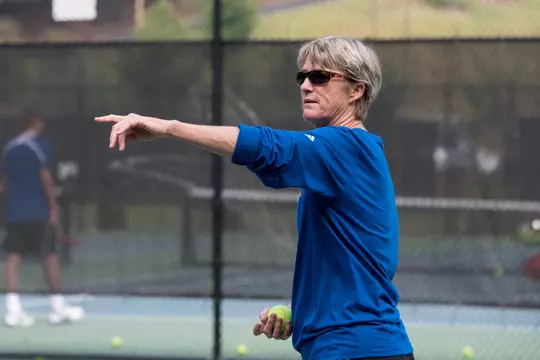
Her Path to the Mountains
“After eight years at Florida State, my partner got a job offer on the faculty at Western Carolina University so I made the decision to leave FSU and move to the mountains. Fortunately, the Asheville coaching position opened up and I was able to continue to do what I love in a place that I love.”
When Gregory first took over, she was in charge of both the men’s and women’s tennis programs.
Overseeing the Men’s and Women’s Programs
“Coaching both the men and women was a lot of fun - I would switch the way I communicated when I went back and forth between the two teams. The men's team never had an issue with my role because I was knowledgeable. It does not matter whether you are a male or female as long as you are good at your job. The only negative was that I was so swamped that I could not do nearly as much coaching as I wanted. At times I felt more like a manager so I made the decision in 2013 to move to the women's side and have Tom take over the men's program.”
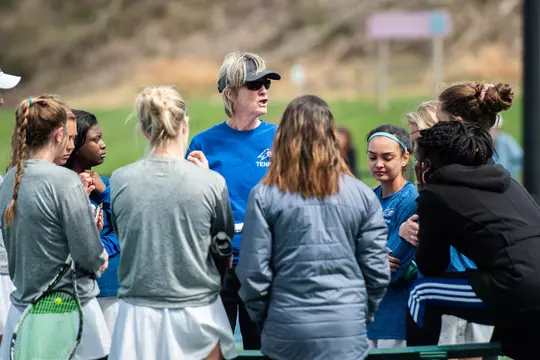
Title IX has helped women’s sports tremendously, but the passing of the law did not automatically result in change. The law did, however, give legal standing to those who still had to fight for equality.
Her Thoughts on Title IX
“Title IX has helped women’s sports tremendously, but the passing of the law did not automatically result in change. The law did, however, give legal standing to those who still had to fight for equality. For example, the US women’s soccer team. Equal prize money at the Grand Slams did not happen until fairly recently…again, not without a fight. Billie Jean King was hugely instrumental in achieving this. Women’s college tennis is so much deeper than when I was in school…there are so many more good programs now. This is a direct result of Title IX.”
Gregory recently capped off her 15th season at UNC Asheville, guiding the women’s team to 13 wins, a No. 4 seed in the Big South Championship and a program-record to five All-Conference honors.